
Hello. Welcome to our INCInq writing well.
Our writing well site is aimed at people who are research-curious. It is a how-to companion guide for conducting co-operative inquiries. It shares droplets of knowledge on how to inquire into a field or topic to answer significant questions.
Over the next 12 months, INCInq members will add interactive information videos and other resources with tips we have gleaned from conducting successful inquiries. It is our way of cheering you and your colleagues on in your research. Happy researching.
RESOURCES
A guide: An International Network of Co-operative Inquiry Inquiry brief for planning inquiries
This guide, designed by Dr Caroline Walters and members of the International Network of Co-operative Inquirers, assists people in considering how to conduct a co-operative inquiry and provides signposting on what is intended regarding completing a project. Consistent with the Co-operative Inquiry ethos, this guide should be developed collaboratively with the intended inquiry group. Co-operative Inquiry is by nature an organic process that evolves during the course of the Inquiry, and therefore, details may not be clear and/or may change during the course of the inquiry. As this occurs, it is suggested that inquirers revisit and update the information.
The following headings can help guide inquirers in designing an inquiry:
- Inquiry topic
- Inquiry facilitator
- Inquirers (this may need to be revised if the group changes during the inquiry)
- Inquiry commencement date
- Approximate inquiry completion date
- Partners/supporters/funders
- Funding
- Aim/ purpose
- Research question (to be determined during the early phases of the inquiry
- Inquiry democratic values agreed upon by the inquiry group (to collect a spectrum of ideas rather than consensus, engage co-design, writing with rather than about, and sharing power)
- Introduction (Brief overview of study/ Purpose)
- Background (Clarity of research problem/ why the study needs to be done)
- Study Design/ Is ethics approval needed? (Inclusive of safety considerations)
- Study Setting/ Location
- Do we need to include anyone else?
- Methodology (may be developed/changed during the course of the inquiry)
- Data Analysis Approach being considered (may be developed/changed during the course of the inquiry)
- Potential Outcomes and Significance
- Possible Dissemination
- Key References (Literature of high relevance to the project to get us started)
For more information, please see the INCInq website https://incinq.csu.domains/ and the INCInq vision document https://researchoutput.csu.edu.au/ws/portalfiles/portal/375768326/INCinq_vision_document_3_.pdf
When does an inquiry need ethics approval?
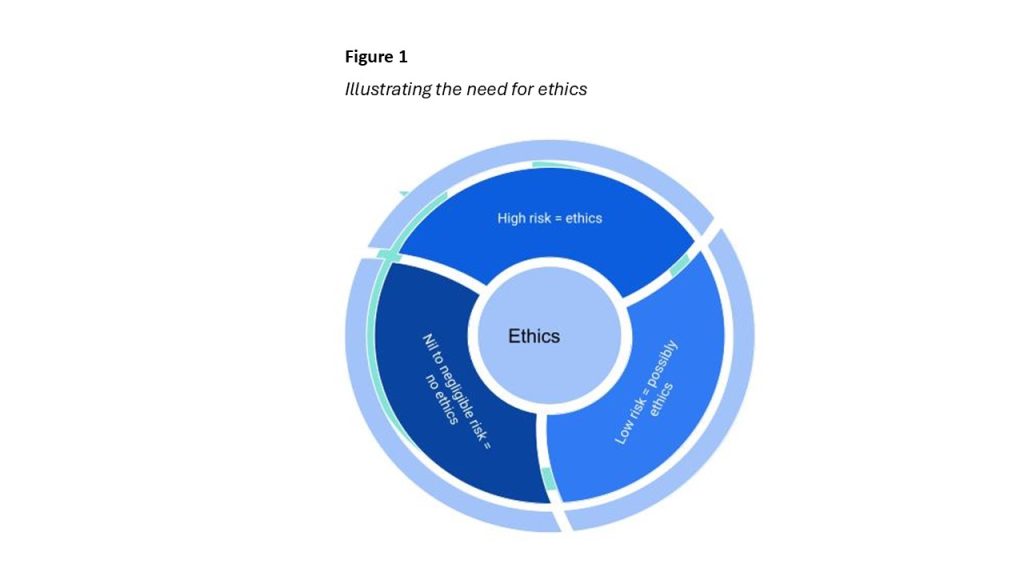
Great question. Here are our (Dr Monica Short and Dr Emma Rush) thoughts on this topic. In many countries or contexts, no-risk research involving no study or investigation occurring on or about people does not require human research ethics approval. However, if you are thinking of publishing your research in traditional academic contexts, it can be helpful to have a human research ethics approval. Also, if a co-operative inquiry engages with risky topics, situations or contexts, then human research ethics approval is required in most countries by a recognised human research ethics committee. If an inquiry covers more than one country, human research ethics approval may be required in each country. In some countries, an inquiry falls under the category of focus group research and can therefore be described as an extended focus group. More information about ethical considerations can be found in our textbook, Co-operative Inquiry: Making research inclusive and accessible, available at https://policy.bristoluniversitypress.co.uk/co-operative-inquiry
Two featured inquiries with ethics approval are:
- The multidisciplinary, mixed-methods inquiry into what works regarding the recruitment, retention and wellbeing of NGO rural mental health workers. This research is funded by NSW Health through The Peregrine Centre as part of the Rural Mental Health Partnership Grant. For details, please see the methodology section of the report: Short, M., Rush, E., Dixon, E., Ivory, N., Bonner, M., Ansell, S., Hemsted, J., Cotter, G. (2025). Industry Partners’ Summary of Research, Impact and Resources Report: Effective recruitment, retention, and wellbeing of non-government organisation rural mental health staff: A pilot study. A Recruitment, Retention Researchers publication. https://researchoutput.csu.edu.au/en/publications/industry-partners-summary-of-research-impact-and-resources-report
- The multidisciplinary, mixed-methods inquiry into the barriers for and enablers/motivators of social work research in a health service. For details, please see the methodology section of the journal article: Short, M., McDonald, A., Nicoll, C., Woodcock, M., Winter, R., Spence, C., & Brown, N. (2025). Building social work practitioner research capacity in a health service: An inquiry. Australian Social Work, 1-18. Advance online publication. https://doi.org/10.1080/0312407X.2025.2587737
Tips for successfully gaining Human Research Ethics Approval, link: https://www.youtube.com/watch?v=kpFfeRfQk0I
Tips on participatory writing, link: https://youtu.be/zxj5NII9AkI
Tips on writing a journal article, link: https://youtu.be/YtsKM0Ipb44
